
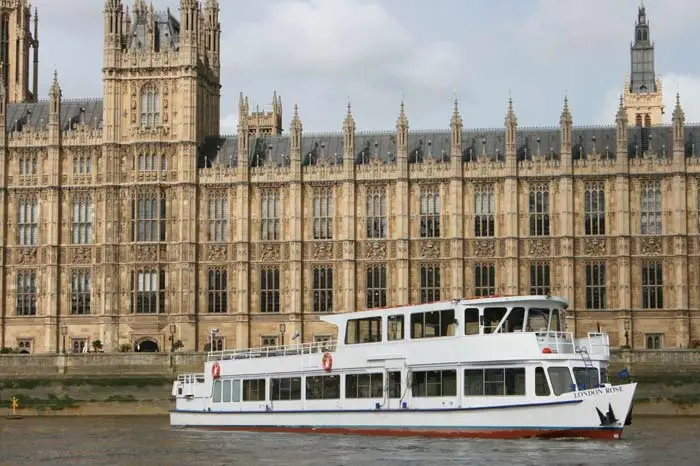
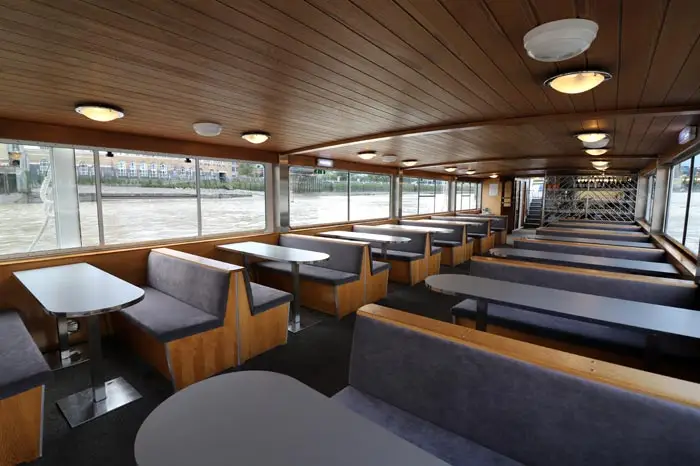
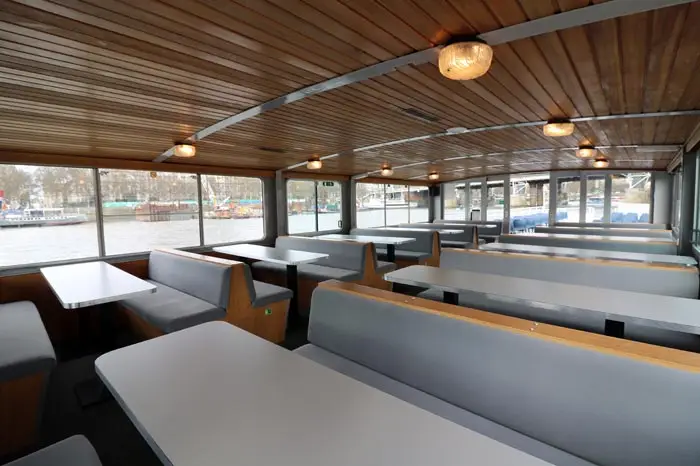
M.V London Rose (Originally named M.S Passauer Wolf) was built in Regensburg, Germany. After many years cruising the Danube she was brought to the Port of London to join the Viscount Cruises fleet. She has spent the last fifteen years serving as one of London’s most popular private hire vessels. Having been extensively refurbished throughout her time in London she now boasts expansive booth seating, a spacious dancefloor and a well-stocked bar.
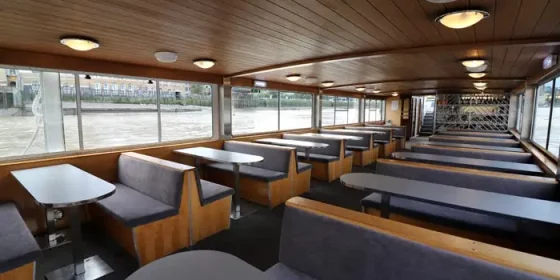
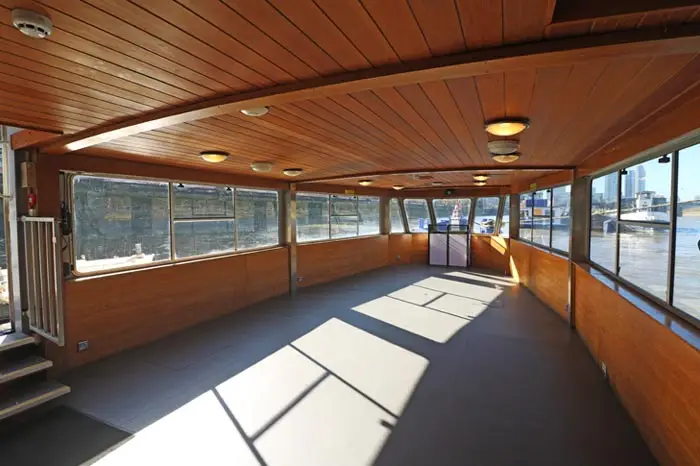
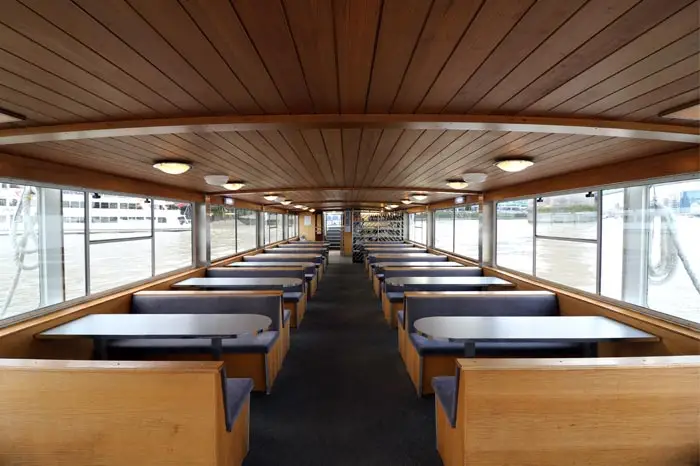
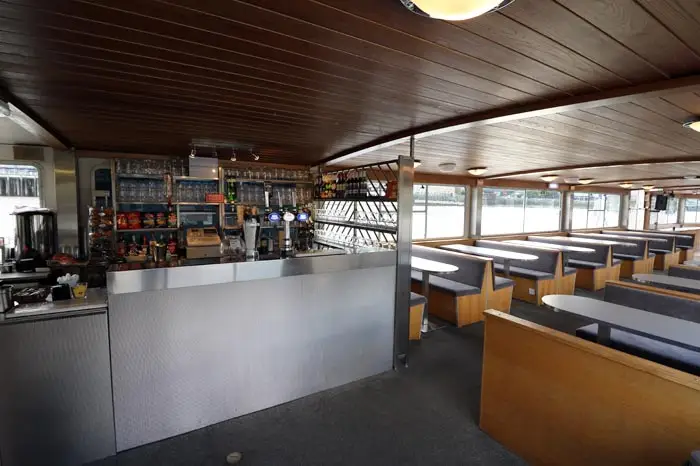
The vessels interior is split between two decks with her lower saloon comfortably seating 72 guests and space for another 80 guests in the upper saloon. London Rose’s dance floor is at the front of the lower saloon and is fitted with a state of the art sound system and laser lighting to ensure the perfect party atmosphere for any occasion. The lower saloon is home to a fully licensed bar serving a wide range of beers, ciders, wines, spirits, soft drinks & snacks. The bar accepts cash and card (minimum spend on card is £5) and drinks can be taken anywhere on board the vessel. Toilet facilities are located at the back of the lower saloon.
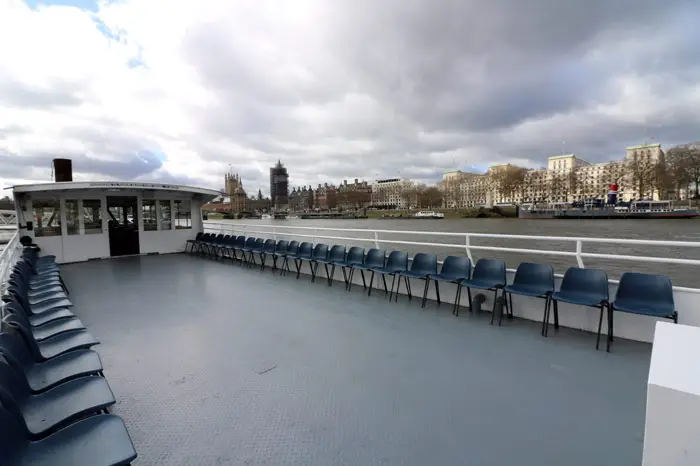
The large upper deck and smaller aft deck are the perfect places to see the sights and provide excellent photo opportunities throughout your cruise.
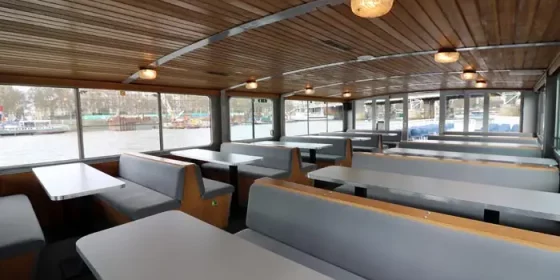
The upper saloon is the perfect place for guests to sit back and relax while they take in the views of London’s breath-taking scenery from a secluded area. The interior of the vessel is fully heated for the winter months and features large panoramic windows providing outstanding views of London’s iconic skyline.
Features
- Lower Saloon 94 sq. m
- Upper Saloon 42 sq. m
- Large Top Deck (Open Air) 62 sq. m
- Aft Deck (Open Air) 23 sq. m
- Heating
- Fully Licensed Bar
- Sound Equipment
- Toilet Facilities
Capacity
- Standing Reception | 180
- Seated Dining | 120 (60 on Each Level)
- Transfers & Sightseeing | 240
Seating Arrangement
- Lower Saloon | 72 (Booths of 6)
- Upper Saloon | 80 (Booths of 8)
Charter Rates
- Monday – Thursday | £1,400* (No VAT)
- – Extra Hours (Mon – Thurs) | £350* (No VAT)
- Friday – Sunday | £1,740* (No VAT)*
- – Extra Hours (Fri – Sun) | £435* (No VAT)
- Embarkation (15 Min) | £130* (+ VAT)
- Disembarkation (15 Min) | £130* (+ VAT)
Optional Extras
- Premium Pier Charge | Varies from Pier to Pier
- On Route Call
- – Standard Rate Pier | £130* (+ VAT) Per 15 Minutes)
- – Premium Rate Pier | £160* (+ VAT) Per 15 Minutes)
- Own Catering Surcharge | £300* (+ VAT)
- Mixer, Speakers & Lighting | £40* (+ VAT) Per Hour)
- DJ Hire (Including Equipment) | £250* (+ VAT) Per 4 Hours)
* All Class V charters are charged at a minimum of 4-hours.
** Friday – Sunday Rates apply on all Bank Holidays. Bespoke rates apply for New Year’s Eve & Special Events including but not limited to Bonfire Weekend, Lord Mayor’s Show Weekend & Halloween Weekend.
*** Sound Equipment or Bluetooth Sound Systems are not included in the vessel charter rates. Any sound requirements are subject to an extra charge.
Download M.V London Rose Brochure: English
We have a range of catering & dining options to complement your event:
- Canapés & Bowl Food
- Hot or Cold Buffets
- Fine Dining
- Summer Barbecues
Enhance your event with a range of entertainment options:
- Live DJ or Karaoke
- Casino Tables
- Photo Booth or Selfie Station
- Jazz Band
We have a range of bar services perfectly suited for corporate events:
- Reception Drinks
- Account Bars
- Bespoke Cocktails
- Tea, Coffee & Mulled Wine